
Call: 08045816914
 Send Inquiry
 Send Inquiry
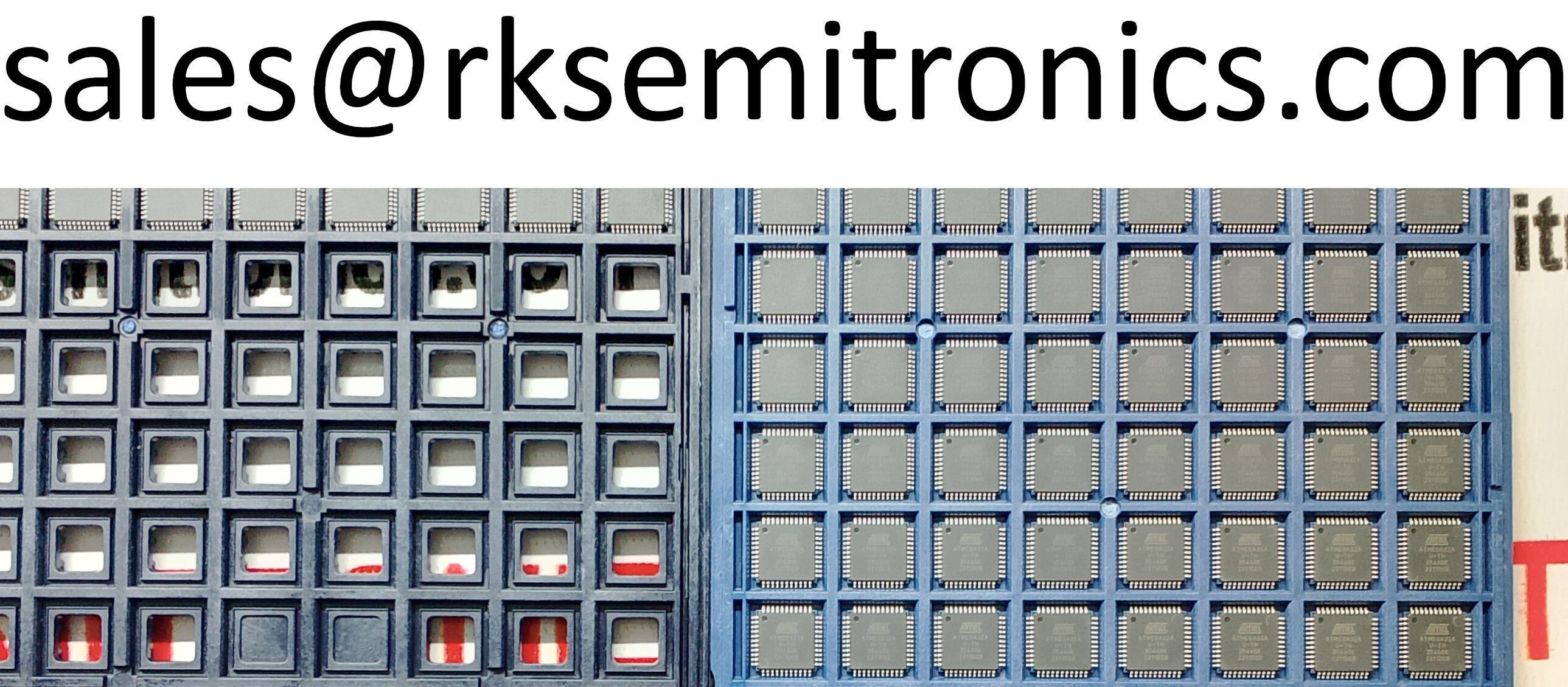
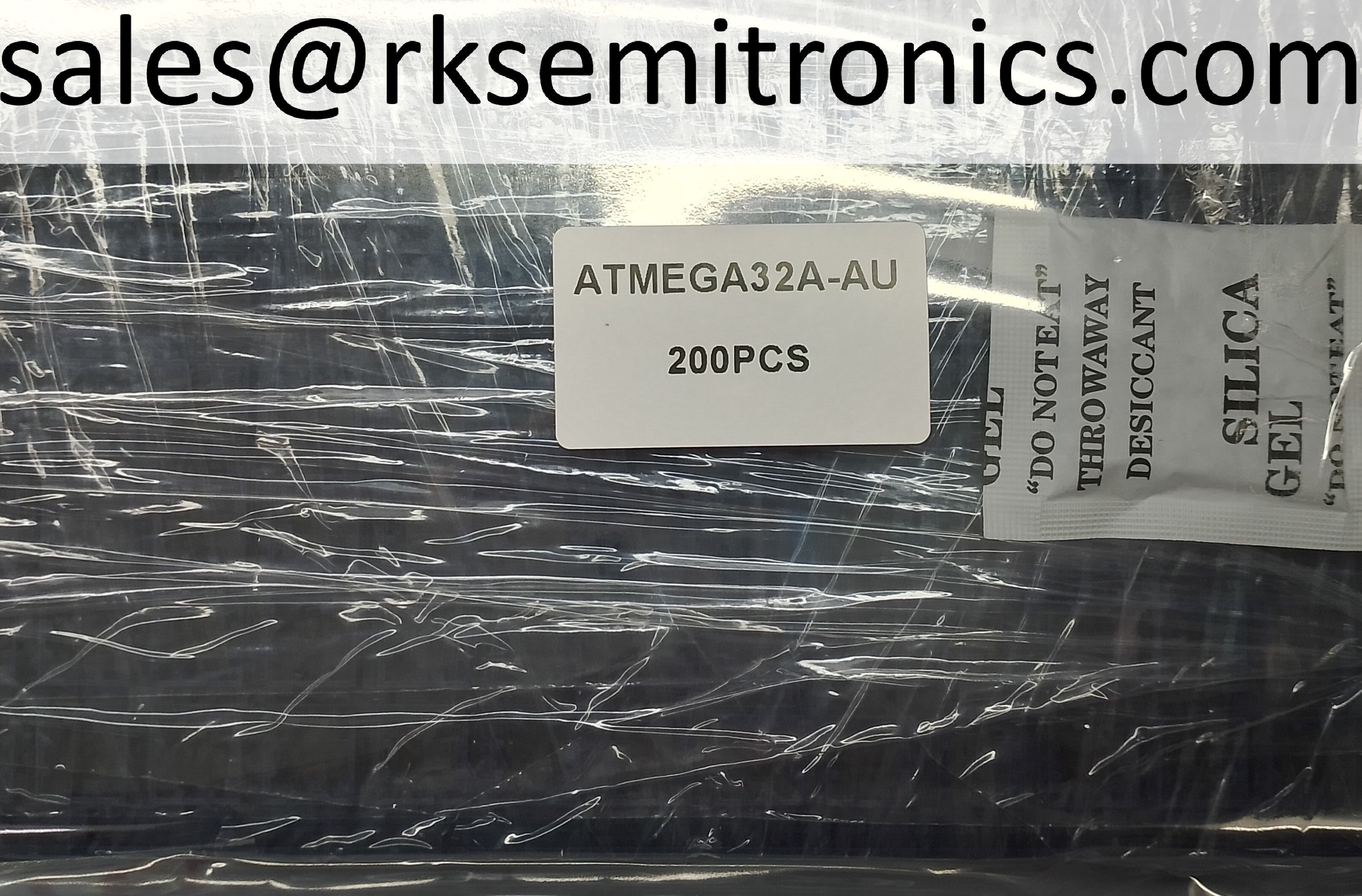
ATMEGA32A-AU IC MCU 8BIT 32KB FLASH 44TQFP
Price 130 INR/ Piece
MOQ : 40 Pieces
ATMEGA32A-AU IC MCU 8BIT 32KB FLASH 44TQFP Specification
- Processor Speed
- 16 MIPS Max at 16MHz
- Resolution
- 8-bit
- Output
- Digital (I/O Ports)
- Operating Temperature
- -40C to +85C
- Components
- ATMEGA32A-AU MCU Chip
- Thermal Conductivity
- Standard for TQFP packages
- Features
- In-System Programmable, Enhanced RISC Architecture, JTAG Interface, 8-channel 10-bit ADC, 32 general purpose I/O lines
- Power Supply
- 3.3V/5V Compatible
- Response Time
- Low Latency Operation
- Usage
- Embedded system control, general purpose applications
- Power Source
- External DC Supply
- Sensors Specification
- Available only via external hardware
- Interface
- USART, SPI, I2C(TWI), ADC
- Input
- Digital (I/O Ports)
- Product Type
- Integrated Circuit Microcontroller
- Application
- Consumer electronics, Industrial control, Automotive, Robotics, Instrumentation
- Rated Voltage
- 5V
- Supply Voltage
- 2.7V to 5.5V
- Size
- 44-TQFP Package
- Dimension (L*W*H)
- 10 mm x 10 mm x 1 mm approx.
- Function
- Microcontroller Unit (MCU)
- Color
- Black / Grey
- Weight
- Approx. 2g
- Capacity
- 32KB Flash
- Current Rating
- Operating: Up to 200mA
- Thickness
- Standard IC Package
- Frequency
- Up to 16 MHz
- Oscillator
- On-Chip RC Oscillator, External Crystal Supported
- SRAM
- 2KB Internal
- EEPROM
- 1024 Bytes
- Pin Count
- 44 pins
- Harvard Architecture
- Yes
- PWM Channels
- 4
- Package Type
- TQFP-44
- Programming Voltage
- 2.7V - 5.5V
- Brown-out Detection
- Programmable
- ISP/ICSP Support
- Yes (In-System Programmable)
- Instruction Set
- Advanced RISC
- Flash Memory
- 32KB In-System Self-Programmable Flash
- Watchdog Timer
- Yes with Separate On-chip Oscillator
- Analogue Inputs
- 8-channel 10-bit ADC
- Timers/Counters
- 3 (Two 8-bit, One 16-bit)
ATMEGA32A-AU IC MCU 8BIT 32KB FLASH 44TQFP Trade Information
- Minimum Order Quantity
- 40 Pieces
- Supply Ability
- 1000 Pieces Per Month
- Delivery Time
- 10 Days
- Main Domestic Market
- All India
About ATMEGA32A-AU IC MCU 8BIT 32KB FLASH 44TQFP
Core:AVR
Program Memory Size:32 kB
Data Bus Width:8 bit
ADC Resolution:10 bit
Maximum Clock Frequency:16 MHz
Number of I/Os:32 I/O
Data RAM Size:2 kB
Supply Voltage - Min:2.7 V
Supply Voltage - Max:5.5 V
Minimum Operating Temperature:- 40 C
Maximum Operating Temperature:+ 85 C
Packaging:Tray
Brand:Microchip Technology
Data RAM Type:SRAM
Data ROM Size:1024 B
Data ROM Type:EEPROM
Height:1 mm
Interface Type:2-Wire, SPI, USART
Length:10 mm
Moisture Sensitive:Yes
Number of Timers/Counters:3 Timer
Processor Series:megaAVR
Product:MCUs
Product Type:8-bit Microcontrollers - MCU
Program Memory Type:Flash
High Performance & Flexibility
The ATMEGA32A-AU MCU achieves high efficiency with its advanced RISC architecture, capable of delivering up to 16 MIPS at 16 MHz. Its 32KB flash memory and multiple I/O lines provide ample resources for complex applications in automation and embedded systems.
Integrated Analog & Digital Interfaces
With its 8-channel 10-bit ADC, the ATMEGA32A-AU supports rich analogue input, while offering digital communication through USART, SPI, and I2C. This allows seamless integration with various sensors and peripherals, adding versatility to your projects.
Robust Reliability & Safety
Enhanced safety is ensured with programmable brown-out detection and an on-chip watchdog timer, crucial for industrial, consumer, and automotive applications operating in demanding environments. The microcontroller's in-system programmability aids in swift firmware updates and field reprogramming.
FAQ's of ATMEGA32A-AU IC MCU 8BIT 32KB FLASH 44TQFP:
Q: How do I program the ATMEGA32A-AU microcontroller?
A: The ATMEGA32A-AU is programmed in-system using an ISP (In-System Programming) interface. You can use standard programmers such as Atmel AVR ISP or compatible tools. The chip supports programming voltages from 2.7V to 5.5V, simplifying integration into various power configurations.Q: What are the key applications for the ATMEGA32A-AU?
A: This microcontroller is well-suited for embedded control, consumer electronics, industrial automation, robotics, instrumentation, and automotive systems due to its rich analog and digital interface support, robust memory resources, and broad operating temperature range.Q: When should I use the onboard 8-channel 10-bit ADC?
A: Use the integrated 8-channel 10-bit ADC whenever your application requires analog data acquisition, such as sensor readings or analog signal monitoring. This feature streamlines design by minimizing the need for external ADC components.Q: Where can I incorporate the ATMEGA32A-AU in my designs?
A: The compact 44-TQFP package and broad voltage compatibility (2.7V-5.5V) make it ideal for space-constrained and low-to-medium voltage powered systems in both commercial and industrial products requiring reliable microcontroller functionality.Q: What process is involved in updating firmware on this MCU?
A: Firmware updates can be executed in-system using the ISP interface, allowing you to refresh the microcontroller's flash storage without removing it from the circuit. This supports efficient maintenance and iterative development.Q: How does the ATMEGA32A-AU benefit embedded system development?
A: Its advanced RISC architecture, ample memory, multi-channel ADC, and broad peripheral support enable rapid prototyping, efficient code execution, and flexible interfacing, reducing time-to-market for your embedded solutions.
Tell us about your requirement

Price:
Quantity
Select Unit
- 50
- 100
- 200
- 250
- 500
- 1000+
Additional detail
Mobile number
Email

More Products in Integrated Circuits Category

LMV722M/NOPB IC OPAMP GP 2 CIRCUIT 8SOIC
Price 145 INR / Piece
Minimum Order Quantity : 35 Pieces
Rated Voltage : 5.5V (Maximum)
Size : 8SOIC (Small Outline Integrated Circuit)
Usage : Signal Amplification, Active Filtering, Analog Circuits
Power Supply : Single or Dual Supply
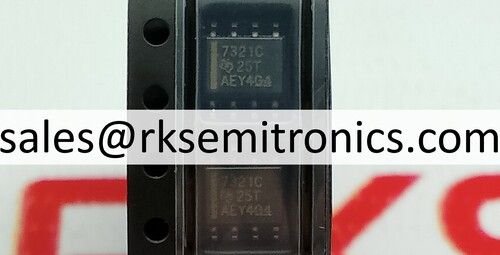
ISO7321CDR IC
Price 120 INR / Piece
Minimum Order Quantity : 50 Pieces
Rated Voltage : 5 V
Size : SOIC8
Usage : Signal isolation
Power Supply : 3 V to 5.5 V

REF102BU IC
Price 235 INR / Piece
Minimum Order Quantity : 25 Pieces
Rated Voltage : 10 V
Size : 8Pin PDIP/Surface Mount
Usage : Voltage reference for data acquisition systems, industrial control systems, and precision instrumentation
Power Supply : DC
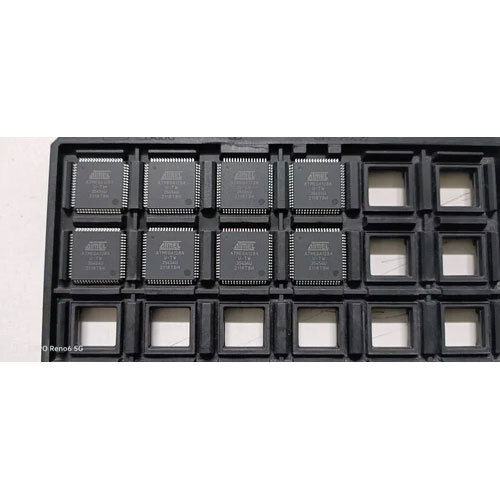
ATMEGA128AU-TW QFP Single Chip Microcontroller IC
Price 250 INR / Piece
Minimum Order Quantity : 100 Pieces
Rated Voltage : 1.8V ~ 5.5V Volt (V)
Size : Different Available
Usage : Industrial
Power Supply : 1.8V ~ 5.5V

Contact Details
RKSEMITRONICS
GST : 09BVBPG7557D1ZK
- C-149, 3rd Floor, Sector 10,Noida - 201301, Uttar Pradesh, India
- Phone :08045816914
 Send Inquiry


Developed and Managed by Infocom Network Private Limited.
