
Call: 08045816914
 Send Inquiry
 Send Inquiry
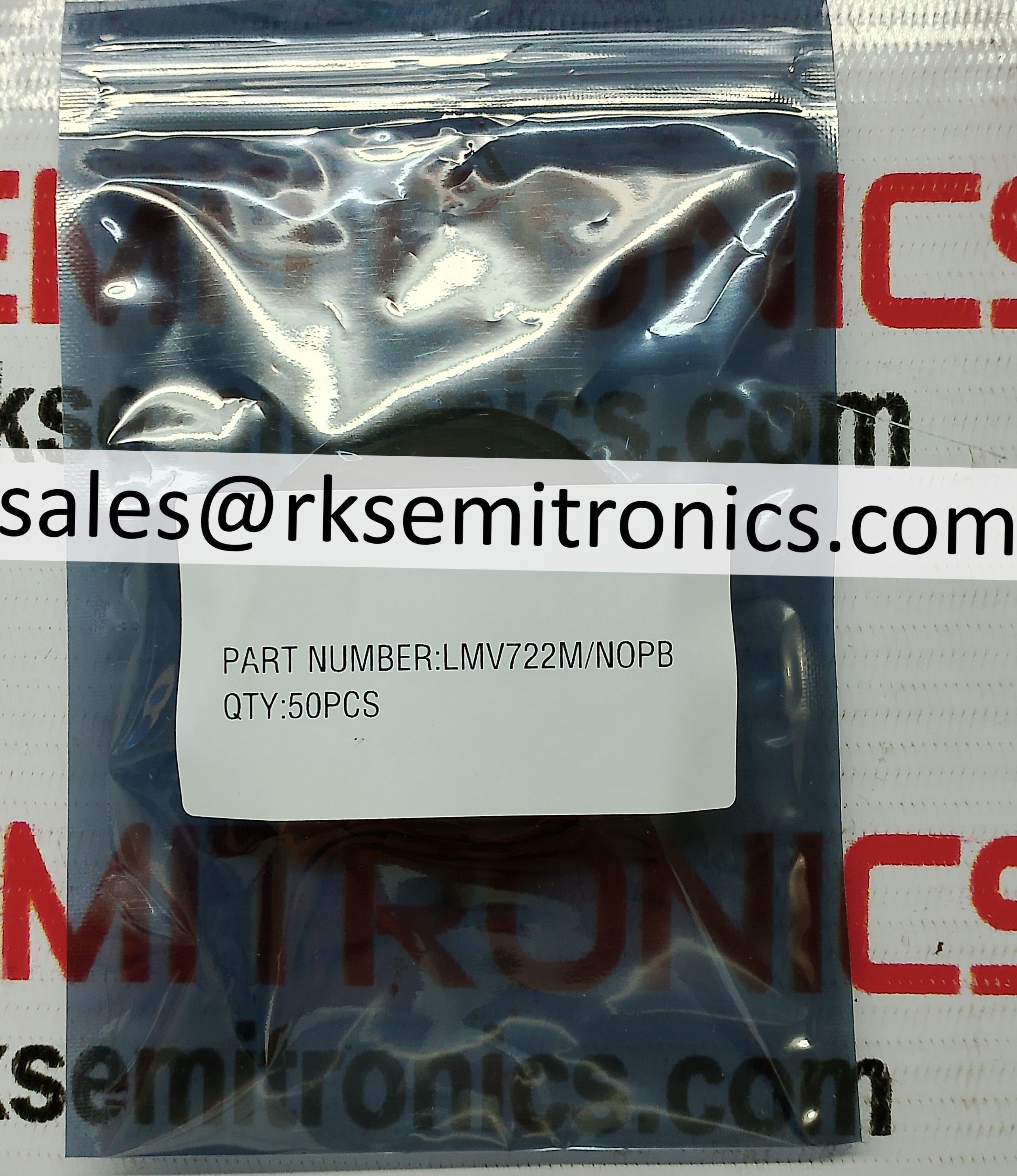
LMV722M/NOPB IC OPAMP GP 2 CIRCUIT 8SOIC
Price 145 INR/ Piece
MOQ : 35 Pieces
LMV722M/NOPB IC OPAMP GP 2 CIRCUIT 8SOIC Specification
- Components
- Integrated Circuits
- Response Time
- Slew Rate 0.7 V/s (typical)
- Power Supply
- Single or Dual Supply
- Usage
- Signal Amplification, Active Filtering, Analog Circuits
- IP Rating
- Not Rated
- Thermal Conductivity
- Low, Standard for Small ICs
- Input
- Differential, Rail-to-Rail
- Output
- Rail-to-Rail
- Interface
- Analog IC
- Features
- Low Offset Voltage, Rail-to-Rail Input/Output, Low Power
- Resolution
- Analog, Not Applicable
- Power Source
- External DC Supply
- Operating Temperature
- -40C to +125C
- Product Type
- Dual Operational Amplifier IC
- Application
- Instrumentation, Data Acquisition, Portable Devices, Signal Conditioning
- Rated Voltage
- 5.5V (Maximum)
- Supply Voltage
- 2.7V to 5.5V
- Size
- 8-SOIC (Small Outline Integrated Circuit)
- Dimension (L*W*H)
- 4.90 mm x 3.91 mm x 1.75 mm (SOIC-8 Package)
- Function
- General Purpose Operational Amplifier
- Color
- Black (IC Body)
- Weight
- Approx. 100 mg
- Thickness
- Max 1.75 mm (body)
- Capacity
- 2 Independent Channels
- Current Rating
- 700 A per Amplifier (Typ)
- Frequency
- 1 MHz (Gain Bandwidth Product)
- Output Current Capability
- 35 mA (typical short circuit)
- Max Output Swing
- 0V to V+ - 0.07V (at RL = 10 k)
- ESD Protection
- 2 kV (HBM)
- Pin Count
- 8
- Input Bias Current
- 0.2 nA (typical)
- Model/Part Number
- LMV722M/NOPB
- PSRR (Power Supply Rejection Ratio)
- 85 dB (typical)
- Input Offset Voltage (max)
- 7 mV
- CMRR (Common Mode Rejection Ratio)
- 80 dB (typical)
- Output Type
- Push-Pull
- Availability
- Active
- RoHS Compliance
- Yes
- Quiescent Current
- 1.4 mA (typ dual amp)
- Input Voltage Range
- GND to V+ - 0.8V
- Package Material
- Molded Plastic
- Lead Finish
- Lead-Free (NiPdAu Finish)
- Moisture Sensitivity Level
- MSL 1 (Unlimited)
- Mounting Type
- Surface Mount
LMV722M/NOPB IC OPAMP GP 2 CIRCUIT 8SOIC Trade Information
- Minimum Order Quantity
- 35 Pieces
- Supply Ability
- 1000 Pieces Per Month
- Delivery Time
- 10 Days
- Main Domestic Market
- All India
About LMV722M/NOPB IC OPAMP GP 2 CIRCUIT 8SOIC
Manufacturer: Texas Instruments Product Category: Operational Amplifiers - Op Amps RoHS: Details Number of Channels: 2 Channel GBP - Gain Bandwidth Product: 10 MHz SR - Slew Rate: 4.9 V/us Vos - Input Offset Voltage: 3 mV Ib - Input Bias Current: 260 nA Supply Voltage - Max: 5.5 V Supply Voltage - Min: 2.2 V Operating Supply Current: 2.01 mA Output Current per Channel: 23.7 mA CMRR - Common Mode Rejection Ratio: 89 dB en - Input Voltage Noise Density: 8.5 nV/sqrt Hz Package/Case: SOIC-8 Mounting Style: SMD/SMT Shutdown: No Shutdown Minimum Operating Temperature: - 40 C Maximum Operating Temperature: + 85 C Series: LMV722-N Packaging: Tube Brand: Texas Instruments Height: 1.45 mm In - Input Noise Current Density: 0.2 pA/sqrt Hz Input Type: Rail-to-Rail Length: 4.9 mm Operating Supply Voltage: 3 V, 5 V Output Type: Rail-to-Rail Product: Operational Amplifiers Product Type: Op Amps - Operational Amplifiers PSRR - Power Supply Rejection Ratio: 70 dB 95 Subcategory: Amplifier ICs Supply Type: Single Technology: BiCMOS Voltage Gain dB: 94 dB Width: 3.9 mm Unit Weight: 187 mgLow Offset with Rail-to-Rail Performance
The LMV722M/NOPB amplifier excels in applications where precision and headroom are critical, combining low input offset voltage (max 7 mV) with rail-to-rail input and output. This results in greater design flexibility and clearer signal processing, especially for equipment that needs to operate close to supply limits or within wide dynamic ranges.
Robust Environmental and ESD Protection
With an operating temperature range from -40C to +125C and 2 kV HBM ESD protection, this device endures harsh environments found in industrial and portable instrumentation. Its RoHS compliance and moisture sensitivity rating of MSL 1 further guarantee longevity and reliability in today's stringent manufacturing ecosystems.
FAQ's of LMV722M/NOPB IC OPAMP GP 2 CIRCUIT 8SOIC:
Q: How can the LMV722M/NOPB operational amplifier be used in signal conditioning applications?
A: This device provides low input offset voltage and rail-to-rail I/O, making it suitable for amplifying small differential signals with high accuracy. Its low bias current ensures minimal error in sensor interfaces or conditioning circuits within instrumentation and data acquisition systems.Q: What benefits does the rail-to-rail input and output feature offer for analog designs?
A: Rail-to-rail input and output maximizes the usable voltage range, allowing signals to swing very close to ground and supply rails. This capability is invaluable for low-voltage, battery-operated systems, ensuring efficient use of the available dynamic range.Q: When should I consider using the LMV722M/NOPB over other general-purpose op amps?
A: Select this op amp when your design requires precision (low offset), low power consumption, and operation from a single or dual supply within 2.7V to 5.5V. Its surface-mount SOIC-8 package and robust ESD protection suit modern, compact electronic assemblies.Q: Where is the LMV722M/NOPB commonly deployed in real-world applications?
A: This component is widely found in portable medical instruments, environmental monitoring devices, and signal-processing modules in industrial control systems-anywhere accurate analog signal amplification or filtering is essential.Q: What is the process for mounting the LMV722M/NOPB and what precautions are necessary?
A: The device is designed for surface-mount technology (SMT) and comes with a molded plastic SOIC-8 package. It should be soldered following standard SMT guidelines, and, due to its MSL 1 rating, it can be handled and stored without special humidity precautions.Q: What are the usage limitations regarding supply voltage and output swing for this amplifier?
A: Operating reliably from 2.7V to 5.5V supplies, the output can typically swing from 0V up to (V+ - 0.07V) at a 10k load, making it suitable for low-voltage and precision analog circuits.


Tell us about your requirement

Price:
Quantity
Select Unit
- 50
- 100
- 200
- 250
- 500
- 1000+
Additional detail
Mobile number
Email

More Products in Integrated Circuits Category

STM32F103CBT6 ARM Microcontroller
Price 105 INR / Piece
Minimum Order Quantity : 50 Pieces
Power Supply : 3.3V DC
Application : Automotive, Industrial, Consumer Electronics, Communication
Frequency : Up to 72 MHz
Current Rating : Typical 34 mA at 72 MHz

ATMEGA32A-AU IC MCU 8BIT 32KB FLASH 44TQFP
Price 130 INR / Piece
Minimum Order Quantity : 40 Pieces
Power Supply : 3.3V/5V Compatible
Application : Consumer electronics, Industrial control, Automotive, Robotics, Instrumentation
Frequency : Up to 16 MHz
Current Rating : Operating: Up to 200mA

EC200UCNAA-N05-SGNSA Mobile Modules External Antenna
Price 780 INR / Piece
Minimum Order Quantity : 10 Pieces
Power Supply : External
Application : IoT Devices, Industrial Automation, Telematics, Smart Metering
Frequency : LTEFDD: B1/B2/B3/B4/B5/B7/B8/B12/B13/B18/B19/B20/B25/B26/B28. LTETDD: B38/B39/B40/B41. WCDMA: B1/B2/B4/B5/B6/B8/B19. GSM: B2/B3/B5/B8
Current Rating : Max 2A (peak)
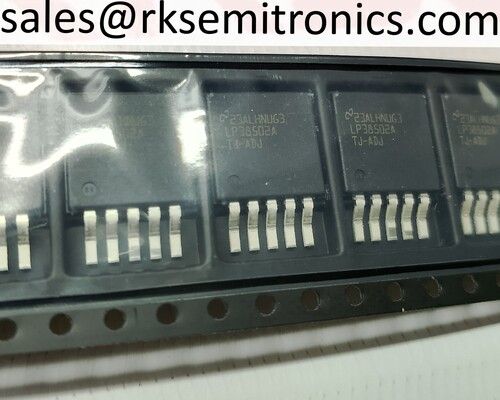
LP38502ATJ-ADJ IC REG LIN POS ADJ 1.5A TO263
Price 251 INR / Piece
Minimum Order Quantity : 20 Pieces
Power Supply : DC
Application : Consumer Electronics, Telecom, Industrial, Power Management
Frequency : Low Frequency/Not switching
Current Rating : 1.5A Max

Contact Details
RKSEMITRONICS
GST : 09BVBPG7557D1ZK
- C-149, 3rd Floor, Sector 10,Noida - 201301, Uttar Pradesh, India
- Phone :08045816914
 Send Inquiry


Developed and Managed by Infocom Network Private Limited.
