
Call: 08045816914
 Send Inquiry
 Send Inquiry
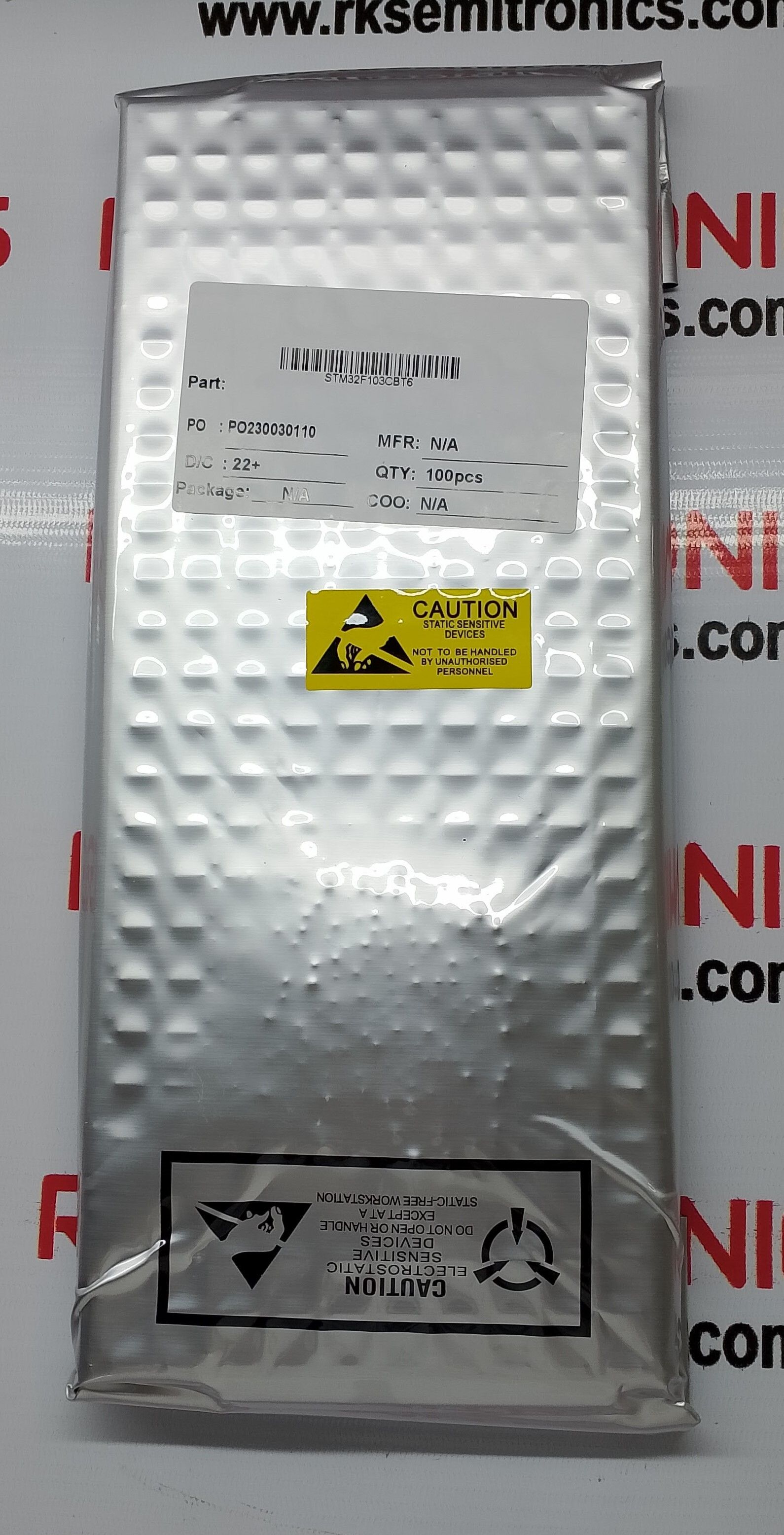
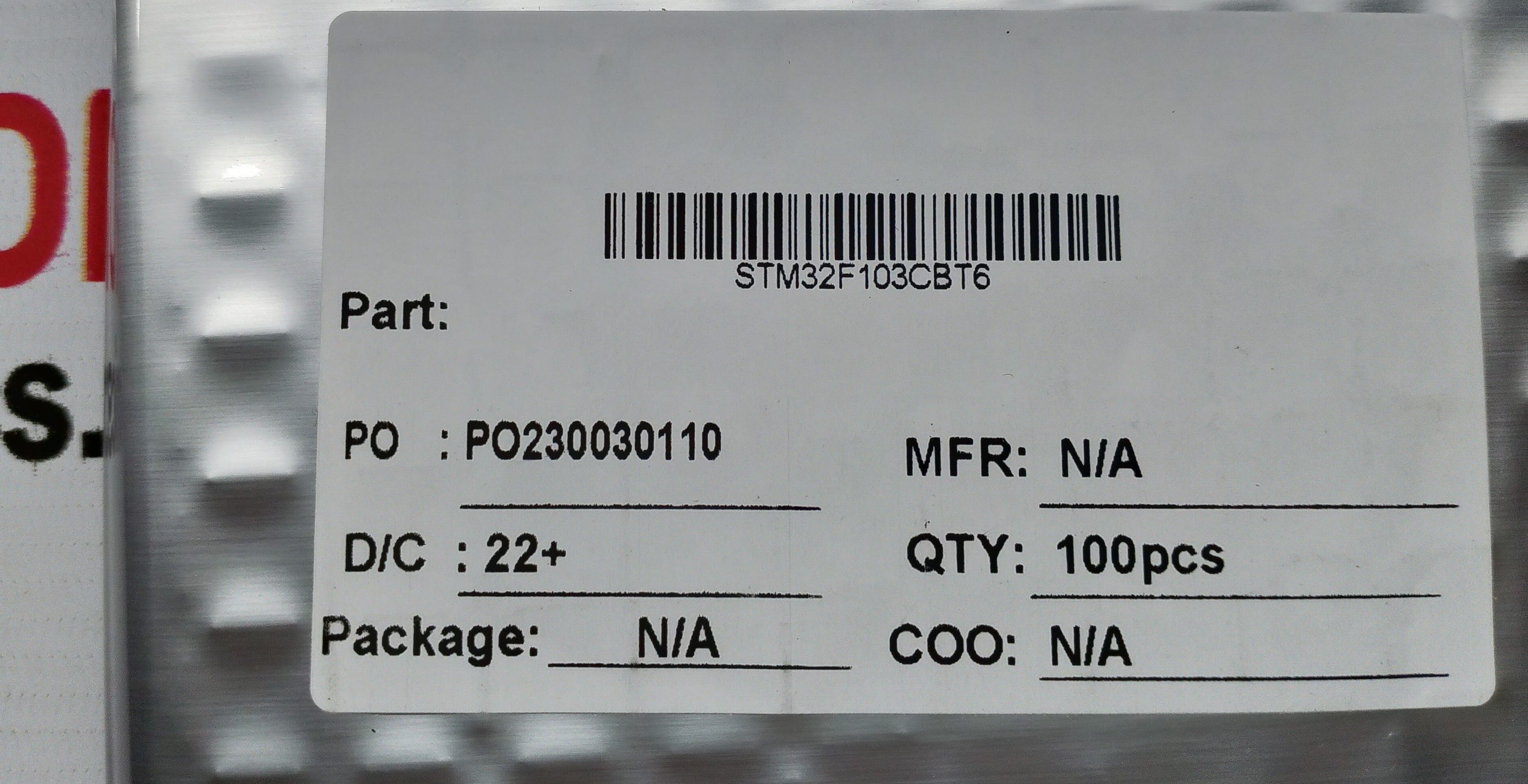
STM32F103CBT6 ARM Microcontroller
Price 105 INR/ Piece
MOQ : 50 Pieces
STM32F103CBT6 ARM Microcontroller Specification
- Response Time
- Instantaneous, dependent on code execution and configuration
- Power Source
- External DC through VDD pins
- IP Rating
- Not rated (IC only)
- Output
- Digital Output
- Input
- Digital Input/Output
- Processor Speed
- 72 MHz max CPU clock
- Charging Voltage
- N/A (not a rechargeable device)
- Usage
- Embedded system control, industrial automation, consumer electronics, robotics
- Thermal Conductivity
- Standard for IC packages
- Sensors Specification
- Supports external sensors via ADC/I2C/SPI interfaces
- Components
- Core, Flash, RAM, Peripherals, Timers, ADC, I/O Ports
- Operating Temperature
- -40C to +85C
- Power Supply
- 3.3V DC
- Features
- Cortex-M3 core, up to 128KB Flash, 20KB RAM, rich interfaces, multiple timers, watchdog, low power modes
- Resolution
- 12-bit ADC resolution
- Display Type
- None (microcontroller IC)
- Interface
- USART, SPI, I2C, CAN, USB, GPIO
- Product Type
- ARM Microcontroller (MCU)
- Application
- Automotive, Industrial, Consumer Electronics, Communication
- Rated Voltage
- 3.3V
- Supply Voltage
- 2.0V to 3.6V
- Size
- LQFP-48 Package
- Dimension (L*W*H)
- 7 mm x 7 mm x 1.4 mm (typical for LQFP-48)
- Function
- ARM Cortex-M3 32-bit RISC core microcontroller
- Color
- Black (chip with white marking)
- Weight
- Approx 0.5 g
- Thickness
- Standard IC thickness
- Current Rating
- Typical 34 mA at 72 MHz
- Capacity
- 128 KB Flash, 20 KB RAM
- Frequency
- Up to 72 MHz
- ADC Channels
- 2 x 12-bit ADC with up to 10 channels
- Flash Memory
- 128 KB in-system programmable
- Low Power Modes
- Sleep, Stop, Standby modes
- DMA Channels
- 7-channel DMA controller
- Clock System
- Internal RC 8 MHz, external crystal up to 25 MHz
- Timer Units
- 3 x 16-bit, 1 x 16-bit advanced control, 2 x watchdog, 1 x SysTick
- Package Type
- LQFP-48 (Quad Flat Package)
- Security
- Read/Write protection, watchdog
- CAN Bus
- Up to 1 Mbps supported
- Programming Interface
- JTAG/SWD, Serial Bootloader
- SRAM
- 20 KB
- USB Specification
- Full-Speed (12 Mbps)
- EEPROM
- None (emulation via Flash possible)
- Operating Voltage Range
- 2.0V to 3.6V
- I/O Pins
- up to 37 GPIOs
STM32F103CBT6 ARM Microcontroller Trade Information
- Minimum Order Quantity
- 50 Pieces
- Supply Ability
- 2 Pieces Per Week
- Delivery Time
- 2 Week
- Main Domestic Market
- All India
About STM32F103CBT6 ARM Microcontroller
Manufacturer: STMicroelectronics Product Category: ARM Microcontrollers - MCU RoHS: Details Series: STM32F103CB Mounting Style: SMD/SMT Package/Case: LQFP-48 Core: ARM Cortex M3 Program Memory Size: 128 kB Data Bus Width: 32 bit ADC Resolution: 12 bit Maximum Clock Frequency: 72 MHz Number of I/Os: 37 I/O Data RAM Size: 20 kB Supply Voltage - Min: 2 V Supply Voltage - Max: 3.6 V Minimum Operating Temperature: - 40 C Maximum Operating Temperature: + 85 C Packaging: Tray Brand: STMicroelectronics Data RAM Type: SRAM Height: 1.4 mm Interface Type: CAN, I2C, SPI, USART, USB Length: 7 mm Moisture Sensitive: Yes Number of ADC Channels: 10 Channel Number of Timers/Counters: 4 Timer Processor Series: ARM Cortex M Product: MCUs Product Type: ARM Microcontrollers - MCU Program Memory Type: Flash 1500 Subcategory: Microcontrollers - MCU Tradename: STM32 Width: 7 mm Unit Weight: 181.700 mgVersatile Connectivity and Peripheral support
The STM32F103CBT6 offers a wide range of interfaces, including USB Full-Speed, CAN bus, SPI, I2C, and USART, making it highly adaptable for communication-intensive embedded system applications. Its support for multiple analog and digital inputs, along with up to 37 GPIOs, ensures comprehensive peripheral integration and flexible system design.
High-Performance ARM Cortex-M3 Core
Operating up to 72 MHz, the ARM Cortex-M3 core delivers fast processing and instant response for control-centric tasks. The architecture supports efficient code execution, robust interrupt handling, and low-latency real-time performance, ideal for industrial automation and consumer electronics.
Efficient Memory and DMA Management
With 128 KB Flash and 20 KB SRAM, the STM32F103CBT6 offers ample space for complex applications and in-system programming. Its 7-channel DMA controller enhances data transfer efficiency between peripherals and memory, freeing up CPU time for core application tasks and boosting overall throughput.
FAQ's of STM32F103CBT6 ARM Microcontroller:
Q: How can I program and debug the STM32F103CBT6 microcontroller?
A: The STM32F103CBT6 supports programming and debugging via JTAG or SWD interfaces. It also includes a serial bootloader for firmware updates. Development tools like ST-LINK, SEGGER J-Link, or compatible programmers are commonly used, and ST's development environment (STM32CubeIDE) simplifies code upload and debugging tasks.Q: What are the main benefits of using the STM32F103CBT6 in embedded systems?
A: Main benefits include a powerful 72 MHz ARM Cortex-M3 core, rich connectivity (USB, CAN, USART, SPI, I2C), dual 12-bit ADCs for sensor interfacing, and robust security with read/write protection and watchdog. Its low power modes and compact LQFP-48 package make it ideal for space and power-constrained applications.Q: When should I use the STM32F103CBT6's DMA controller?
A: The 7-channel DMA controller is best used when you need efficient, CPU-offloaded data transfers between peripherals (like ADC, USART, SPI) and memory. It is especially beneficial in applications requiring high-speed data acquisition, processing, or communication without burdening the processor.Q: Where is the STM32F103CBT6 typically applied?
A: This microcontroller is widely used in automotive systems, industrial automation, robotics, consumer electronics, and communication devices. Its versatility and robust feature set support complex control tasks across many sectors requiring reliability and performance.Q: What process is involved in enabling analog signal measurement on this device?
A: To measure analog signals, configure one of the two 12-bit ADC modules (each with up to 10 input channels) via the microcontroller's software interface. Select the input channel, set sampling parameters, start conversion, and retrieve results digitally for further processing or decision-making.Q: How does the STM32F103CBT6 handle low power operation?
A: The device offers multiple low power modes, including Sleep, Stop, and Standby. Developers can select and configure these modes via firmware to conserve energy, especially in battery-powered or always-on applications, significantly increasing system efficiency.Q: What advantage does the CAN bus interface provide on this microcontroller?
A: The integrated CAN interface, supporting up to 1 Mbps, allows reliable, real-time communication across distributed systems such as automotive networks or industrial controllers. It facilitates robust multi-device connectivity with fault tolerance and deterministic data transfer.

Tell us about your requirement

Price:
Quantity
Select Unit
- 50
- 100
- 200
- 250
- 500
- 1000+
Additional detail
Mobile number
Email

More Products in Integrated Circuits Category

ATMEGA128A-AU 8-bit Microcontroller
Price 250 INR / Piece
Minimum Order Quantity : 25 Pieces
Color : Black
Size : TQFP64, 12mm x 12mm
Rated Voltage : 5V
Usage : Embedded control systems, robotics, consumer electronics

TMS320F28027FPTT 32-bit Microcontrollers
Price 485 INR / Piece
Minimum Order Quantity : 20 Pieces
Color : Black (package)
Size : 32pin LQFP (7x7 mm)
Rated Voltage : 3.3 V
Usage : Industrial Automation, Motor Control, Embedded Systems
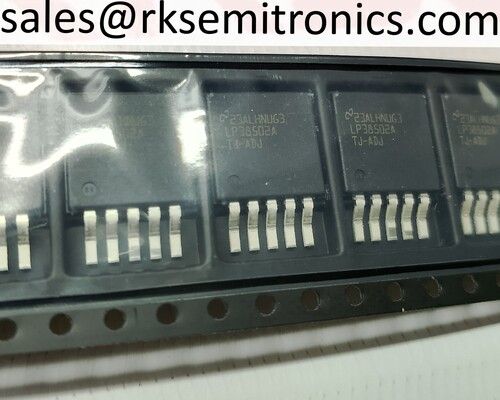
LP38502ATJ-ADJ IC REG LIN POS ADJ 1.5A TO263
Price 251 INR / Piece
Minimum Order Quantity : 20 Pieces
Color : Black (Standard IC Mold)
Size : TO263 package
Rated Voltage : Up to 5.5V input
Usage : Lowdropout voltage regulation, power management
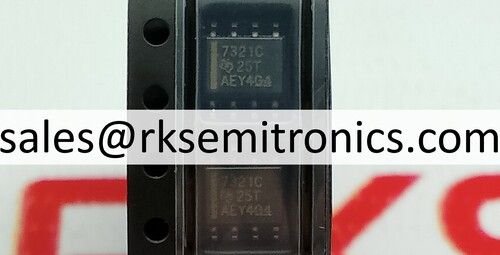
ISO7321CDR IC
Price 120 INR / Piece
Minimum Order Quantity : 50 Pieces
Color : Black
Size : SOIC8
Rated Voltage : 5 V
Usage : Signal isolation

Contact Details
RKSEMITRONICS
GST : 09BVBPG7557D1ZK
- C-149, 3rd Floor, Sector 10,Noida - 201301, Uttar Pradesh, India
- Phone :08045816914
 Send Inquiry


Developed and Managed by Infocom Network Private Limited.
